








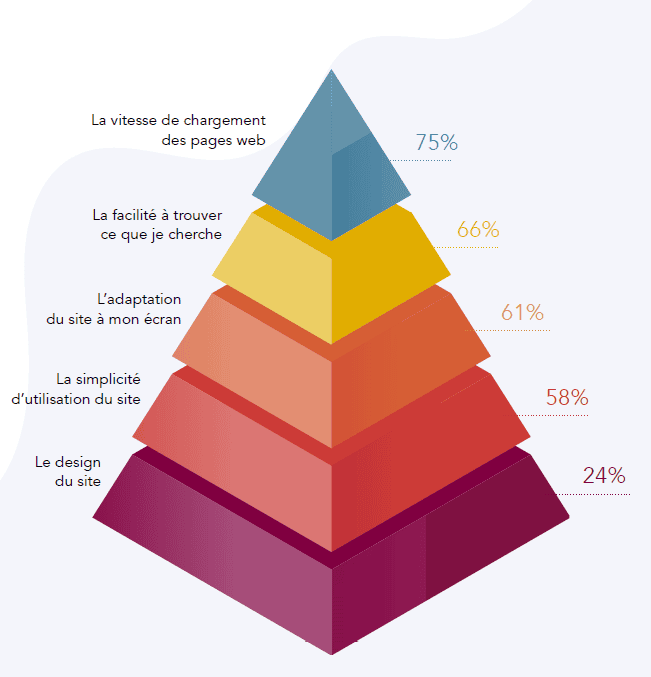

La vitesse de chargement des pages web est considérée comme l’attente la plus élevée dans la hiérarchie UX, selon le rapport Speed Matters de Google. Découvrez la pyramide de l’UX !
La vitesse de chargement des pages web : principale exigence des utilisateurs
Le niveau d’attente des internautes d’aujourd’hui est frappant. Depuis que le mobile est devenu le device le plus utilisé pour se connecter à internet, les utilisateurs accèdent aux contenus et aux services sur le pouce. Ils s’attendent à une facilité et une fluidité de connexion depuis leur smartphone, n’importe où et n’importe quand.
Le temps de chargement est désormais le critère le plus important pour les utilisateurs :

Source : Speed Matters
Au-delà d’une « simple attente » des utilisateurs, la vitesse peut avoir un impact massif sur les commerces en ligne. En effet 53% des visites de sites mobiles sont abandonnées si les pages prennent plus de temps de 3 secondes à charger.
Un web de plus en plus lourd, des pages web lentes à charger
Le web devient de plus en plus lourd chaque année. Si nous analysons l’état du Web, nous pouvons voir qu’une page médiane sur le mobile atteint environ 1,5 Mo, la majorité étant constituée de JavaScript et d’images.
La taille croissante des sites Web, combinée à d’autres facteurs, tels que la latence du réseau, les limitations du processeur, les motifs de blocage des rendus ou les codes tiers superflus, contribue au problème complexe des performances, notamment sur mobile.
Une prise de conscience essentielle
Depuis quelques années, les responsables des sites e-commerce sont de plus en plus vigilants sur la vitesse de chargement des pages. Pourtant, faute de ressources ou d’expertise, l’optimisation de la webperf est souvent reléguée au second plan en pratique.
L’ensemble des contributeurs des sites web doivent prendre conscience de l’importance des temps de chargement et prévoir un Budget Performance pour maintenir durablement l’efficacité de leurs actions !
La première étape de cette prise de conscience passe par une évaluation de votre webperf. Pour cela, plusieurs outils sont à votre disposition :
- jetez un œil à Google Analytics
- allez plus en profondeur avec ces 7 outils pour analyser la performance de votre site
- comparez vos performances à celles des plus grands sites e-commerce français
- calculez l’impact financier de vos temps de chargement
- ou plus simple, demandez-nous un audit de vitesse gratuit :