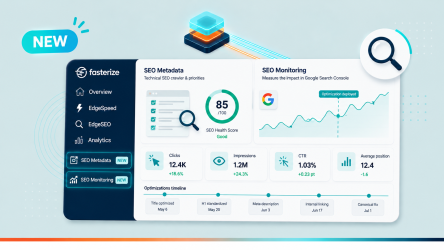









SEO has never been more structured. Clear audits, prioritised roadmaps, well-defined actions.
And yet, something doesn’t quite work anymore. By the time changes go live, the context has already shifted.
This is exactly what we explored in our webinar:
“From cycle-based SEO to real-time execution: the GEO shift”
The issue isn’t SEO. It’s timing.
SEO teams are doing the right work.
The real problem lies in the delay between insight… and execution.
Search is evolving continuously.
But most SEO organisations still operate in cycles (audit → roadmap → backlog → release).
That gap now has a real cost.
The hidden cost: SEO latency
When a high-impact change takes weeks to go live:
growth is delayed
GEO visibility opportunities are missed
test & learn cycles slow down
In fast-moving Search environments, speed of execution becomes a performance driver.
The shift: from planning to real-time execution
The most advanced SEO teams aren’t producing more recommendations.
They’re changing how they operate:
❌ Less reliance on long planning cycles
❌ Less dependency on dev backlogs
✅ More continuous testing
✅ Faster validation loops
✅ Execution in hours, not weeks
This is what real-time SEO looks like.
Why this matters in the age of AI (GEO)
With generative engines (ChatGPT, Perplexity, Google SGE):
visibility windows are shorter
content is selected dynamically
adaptability becomes critical
It’s no longer just about what you publish.
It’s about how quickly you can adapt and deploy.
The new SEO skill in 2026
SEO used to be about analysis and strategy.
Today, a new capability is emerging: execution agility
Because: Strategy without execution speed is just documentation.
🎥 Watch the replay
If you want to go deeper into this shift and see how teams are adapting: